 Sikh Journey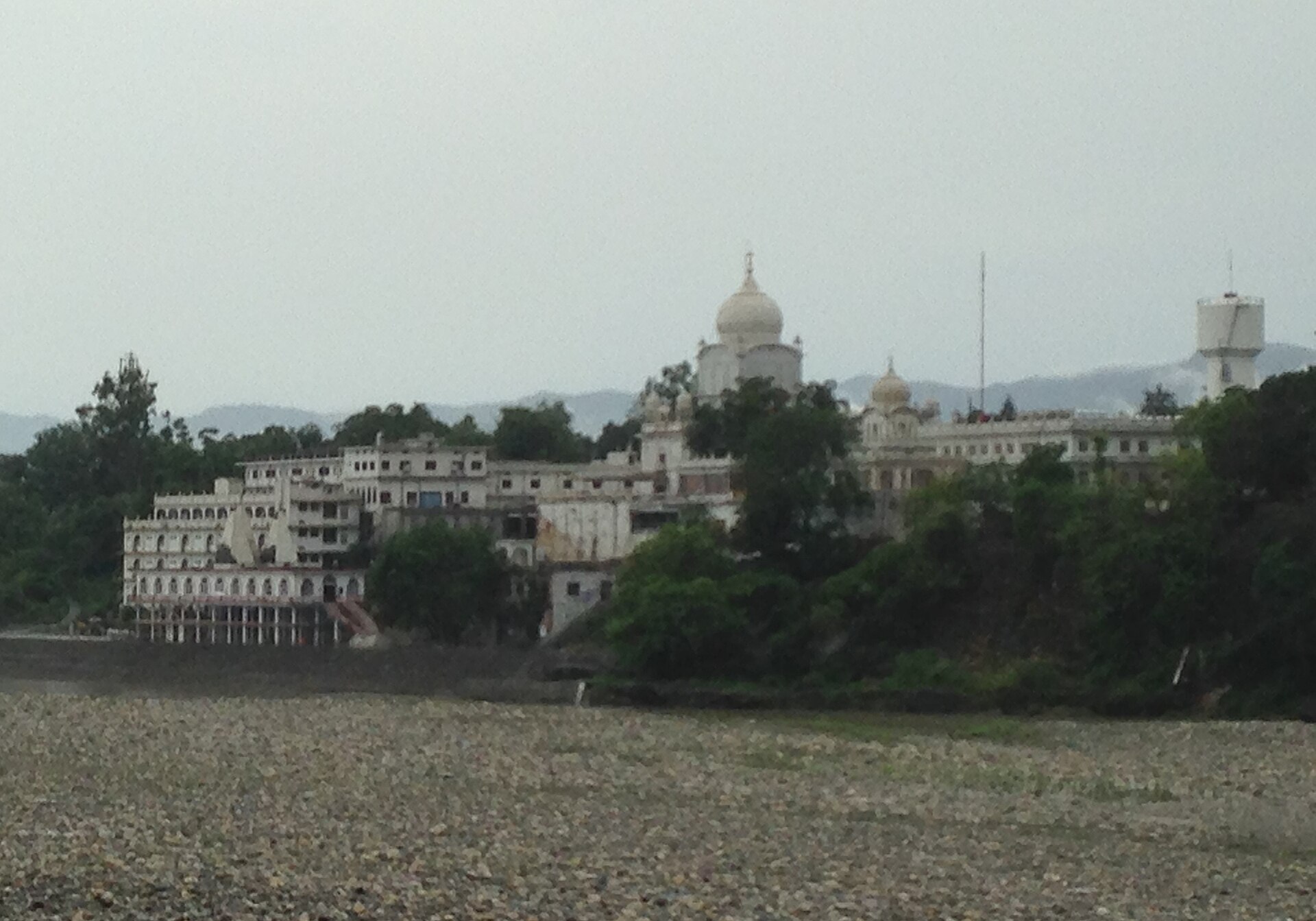
Trip guide · 7 min read
A Closer Look at Dehradun, Mussoorie, Paonta Sahib & Rishikesh
The history behind Guru Gobind Singh's four years at Paonta Sahib, how a colonial-era captain founded Mussoorie, and what to see, do, and eat across the whole trip.
History worth knowing
Paonta Sahib gets its name from a small, human detail. "Paon" means foot, and by most local accounts, Guru Gobind Singh got off his horse at this spot on the banks of the Yamuna, liked what he found, and stayed. He arrived here in 1685, still in his teens, and what was meant to be a stop turned into roughly three to four years — one of the more settled, productive stretches of his life before the conflicts that would later define much of his Guruship.
This is where he gathered 52 poets and scholars around him, several of whom had previously served in Mughal courts, and set them to work translating and composing in Braj Bhasha and Persian alongside his own writing. He held poetry symposiums and gave out awards for the best work. Most of what would later be compiled as the Dasam Granth — the body of writings attributed to the tenth Guru — was written during these Paonta Sahib years, though the Granth itself wasn't formally compiled until 1721, well after his death, by his companion Bhai Mani Singh.
It wasn't purely a literary retreat, either. Guru Gobind Singh also trained an army here and practiced archery, and tension with the hill chieftains of the region — over both military rivalry and religious difference — eventually came to a head. In 1688, at Bhangani, about 10 km from Paonta, his forces met an alliance led by Bhim Chand of Bilaspur. It was the Guru's first battle, fought at 19 or 21 depending on the source, and a Muslim pir, Pir Buddhu Shah, brought several hundred of his own followers to fight alongside the Guru after Bhim Chand's side lured away the Pathan mercenaries the Guru had employed — a detail worth sitting with, in a period often remembered only for its conflicts along religious lines.
Dehradun's own historical thread is a different, much later story. The Forest Research Institute began as a small forestry school in 1878, was absorbed by the colonial government in 1884, and got its current Greco-Roman main building in 1929 — a structure so large it was once listed as the world's biggest brick building. It has nothing to do with Sikh history, but it says something about how layered this region's past is: a Mughal-era Sikh Guru's poetry court and a British colonial forestry academy, half a day's drive apart.
Mussoorie's history is a third thread again, later even than the FRI. Captain Frederick Young of the East India Company founded it as a hill retreat in 1825 — the same Young who later raised the region's first Gurkha Regiment — and the town has carried the nickname "Queen of the Hills" ever since. It's the one stop on this itinerary with no Sikh connection at all, included simply as the mainstream counterpart to the trip's gurudwara visits.
What to see
At Paonta Sahib, the gurudwara itself sits right on the Yamuna, and the riverside setting is worth taking in slowly rather than rushing through — this is a working, living gurudwara rather than a museum piece, so the atmosphere changes depending on the time of day and who else is visiting. A small site museum inside displays weapons and artefacts associated with the Guru's time here.
At the Forest Research Institute, the building itself is the main event — long colonnaded corridors, a domed central hall, and manicured lawns that make it feel more like a European academy than a forestry department. Inside, six small museums (timber, pathology, entomology, silviculture, social forestry, and non-wood forest products) are quirkier and more interesting than they sound, especially the timber museum's cross-sections of enormous tree trunks.
In Mussoorie, The Mall is the town's spine — a promenade lined with colonial-era buildings running between Picture Palace and the Library, with the Doon valley dropping away below it. The Gun Hill cable car climbs to a viewpoint that once doubled as a cannon-firing time signal in the British era, and Camel's Back Road, named for a camel-shaped rock formation along the way, is the classic sunset walk. Kempty Falls, further out of town, draws big crowds and can feel more like a bazaar than a waterfall in peak season — worth knowing before you set expectations too high.
In Rishikesh, the Ganga ghats are the real draw — Triveni Ghat in the evening for the aarti, and the riverfront in general for just sitting and watching the water. Laxman Jhula, the suspension bridge, is worth seeing even if you don't walk across it. If you have any extra time in the area, the Chilla/Pashulok Barrage stretch along the Ganga canal on the way into Rishikesh is a scenic, easy detour, and Haridwar's own ghats are close enough to combine with this trip if a future visit allows for it.
What to do
This is deliberately one of the gentlest itineraries here, and Rishikesh's reputation for adventure sports — river rafting, bungee jumping, cliff jumping — isn't really what this trip is about. If that's what you're after, it's available in town, but it sits outside the pace this particular itinerary is built around.
What fits better: a slow walk along the FRI's lawns, time on a houseboat-style ghat bench watching the Ganga Aarti unfold at Triveni Ghat, and simply sitting by the Yamuna at Paonta Sahib rather than treating it as a quick stop. Rishikesh is also genuinely a good place to sit in on a yoga or meditation session if that interests you — it's been drawing yogis and, since the Beatles visited in 1968, international attention, for exactly that reason, and plenty of ashrams welcome short drop-in sessions without requiring a multi-day commitment.
What to eat
Garhwali food, the regional cuisine around Dehradun and this part of Uttarakhand, leans on simple, home-style cooking rather than heavy spicing — mountain ingredients, slow cooking, and not much oil. Look out for kafuli, a slow-cooked spinach and fenugreek preparation; chainsoo, a roasted and ground black gram dish that's substantial enough to be a meal on its own; and jhangora ki kheer, a millet-based dessert that's a good way to end a meal here.
Rishikesh works differently. By civic law rather than just custom, no meat or alcohol is served anywhere in the town, so every restaurant is vegetarian by default. The food culture leans toward satvik thalis — light, freshly cooked vegetarian meals meant to sit easily rather than impress — alongside a fair number of cafés serving global, health-conscious food for the international yoga crowd. It's a good town to eat simply and eat well at the same time.
Trivia & local lore
The name "Paonta" itself is a small piece of oral history — most accounts trace it to the Guru dismounting his horse here, though a few tell a different version involving an ankle ornament lost in the Yamuna during his morning bath. Both stories point to the same idea: a place named for a very human, unplanned moment rather than a grand designation.
At the Battle of Bhangani, several hundred of Pir Buddhu Shah's own followers, including two of his sons, fought and died alongside Guru Gobind Singh's forces — a Muslim pir's household giving up its own sons for a Sikh Guru's cause, in a battle usually filed away simply as a regional power struggle.
And the Forest Research Institute's main building, completed in 1929, once held the Guinness World Record for the largest brick building on Earth — a genuinely strange fact to end up attached to what is, at heart, a forestry research campus.