 Sikh Journey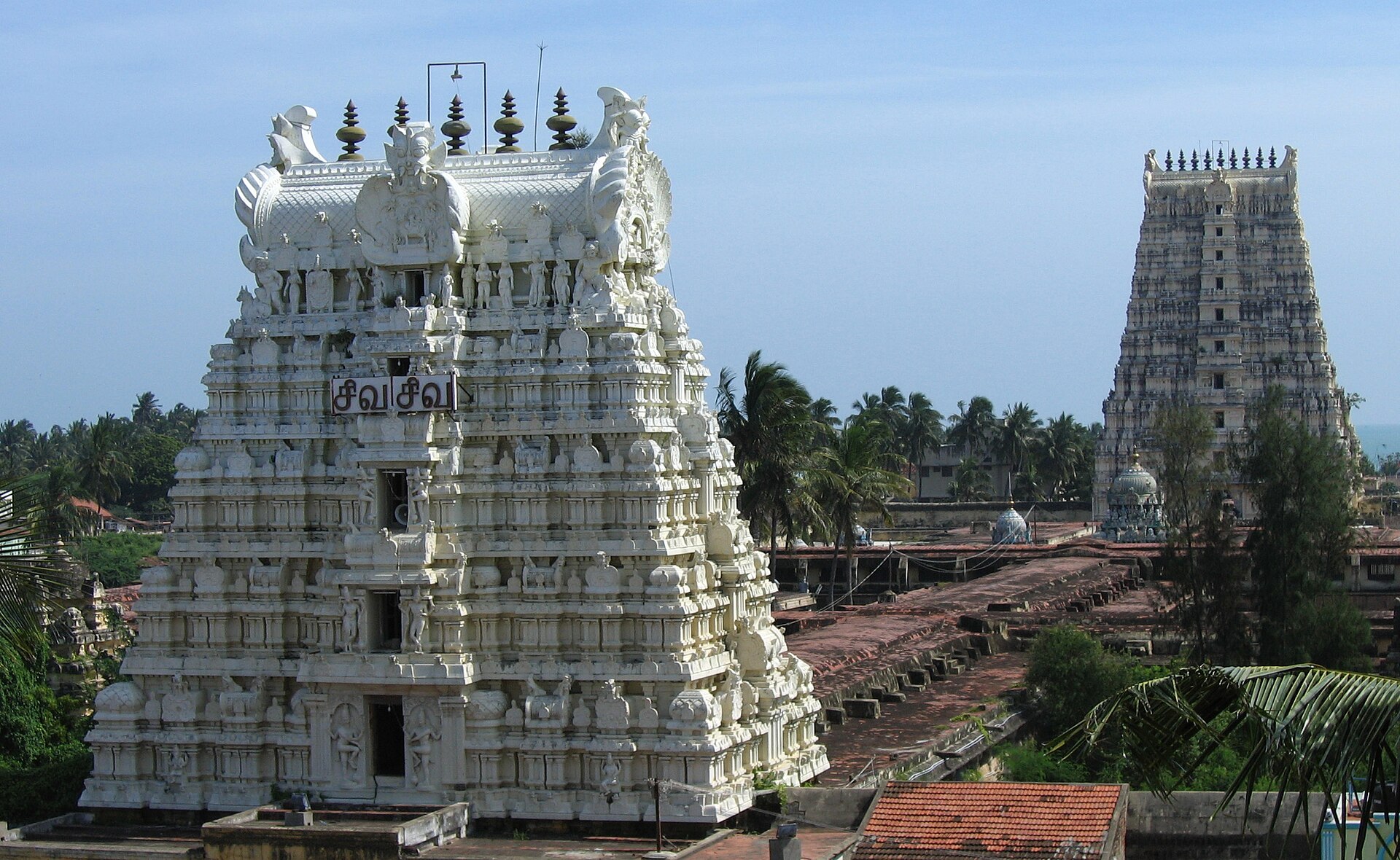
Trip guide · 7 min read
Tamil Nadu's Temple Trail: What to See, Do, and Eat Along the Way
A closer look at the history behind Kanchipuram, Thanjavur, Rameswaram, and Madurai's great temples — plus what to eat, what to see, and the stories behind Dhanushkodi's ruins and the Pamban Bridge.
A journey through empires
This route strings together temples built centuries apart by different dynasties, and knowing roughly when each one went up makes the whole trip click into place. Kanchipuram's Kailasanathar Temple is the oldest of the lot, built between about 700 and 728 CE under the Pallava king Narasimhavarman II. It's sometimes called the "Sand Temple" locally, because its superstructure and carvings are sandstone sitting on a granite plinth — an early, large-scale use of sandstone in South Indian temple building, and a template other Pallava temples borrowed from afterward.
Three centuries later, the Chola dynasty built on an entirely different scale. Raja Raja Chola I completed the Brihadeeswarar Temple in Thanjavur around 1010 CE, and it remains one of the most audacious engineering feats of its era — more on that in the trivia section below. By the time you reach Madurai's Meenakshi Amman Temple, you're looking at a site with ancient roots but a look that's largely the work of the Nayak rulers from the 16th and 17th centuries, who rebuilt it into the riot of carved, painted gopurams you see today.
The Sikh heritage layered onto this route belongs to a different, later story: Guru Nanak Dev's second Udasi, his journey south toward Sri Lanka in the early 1500s. Sikh tradition holds he passed through Kanchipuram and held a discourse with a Jain ascetic there — no shrine marks that encounter today, so it's a historical waypoint rather than a pilgrimage stop. Rameswaram is more concrete: Gurudwara Guru Nanak Dham marks a 19-day stay in 1511 on his return journey, and the story of the freshwater spring he's said to have dug there is still told by the gurudwara's caretakers today.
What to see
Kailasanathar's appeal is in the detail rather than the scale — carved lion-based pillars, meditation cells ringing the main shrine, and some of the earliest surviving mural fragments in Tamil Nadu, all in a much quieter setting than Kanchipuram's bigger, more crowded temples. Thanjavur flips that: the Brihadeeswarar Temple's 66-metre vimana (tower) is built to be seen from a distance, its silhouette dominating the town's skyline, and its stone carving up close is just as detailed as anything at Kanchipuram.
Rameswaram's Ramanathaswamy Temple is built around its corridors, not just its sanctum — roughly 1,200 metres of pillared walkways lined with an estimated 1,212 carved granite pillars, widely cited as the longest temple corridor in the world. Stand at one end of the long third corridor and look down its length; the pillars appear to converge to a single point on the horizon. From Rameswaram, the drive out to Dhanushkodi is a completely different kind of sight — a narrow spit of sand between two seas, scattered with the roofless stone shells of a town that was never rebuilt.
Madurai closes the trip with the Meenakshi Amman Temple's gopurams — towering gateway towers covered in thousands of painted stucco figures, best appreciated by picking two or three and actually looking closely rather than trying to take in all twelve at once.
What to do
Most of this trip is temple-going, and each one rewards a slow pace rather than a rushed circuit: walking Ramanathaswamy's full corridor, wandering Kailasanathar's outer shrine cells, or just sitting a while in Brihadeeswarar's courtyard as the tower catches the evening light. In Rameswaram, crossing the Pamban Bridge by road is worth doing deliberately rather than just passing over it — it's a good ten minutes of open sea on both sides.
Dhanushkodi is best treated as a walk, not a drive-through: park where the road ends and walk out among the ruins and along the beach where the Bay of Bengal and the Gulf of Mannar meet. In Chennai, an evening stroll along Marina Beach is the easy, unstructured counterpart to the temple-heavy days ahead — one of the longest urban beaches in the country, and busiest right around sunset.
What to eat
The stretch between Thanjavur and Madurai puts you in and around Chettinad country, known for a cooking style built on freshly ground spice blends — fennel, star anise, cinnamon, cloves, pepper, and cumin turn up in everything from meat kozhambus to purely vegetarian dishes like a dry-roasted potato preparation (urulai roast) or okra in tamarind sauce (vendakkai mandi). If you've got a sweet tooth, athirasam — a rice-flour-and-jaggery dessert — is a Chettinad specialty worth seeking out.
Filter coffee (kaapi) is less a beverage than a ritual in Tamil Nadu — brewed slowly through a two-part metal filter, mixed with hot milk, and traditionally served in a steel tumbler set inside a small bowl (davara), which you'll see used to cool the coffee by pouring it back and forth. Madurai has its own food identity worth trying on the ground: jigarthanda, a cold, layered dessert drink, and muttaiparotta, a flaky parotta bread stuffed with minced meat and egg. Dosa varieties shift as you move through the region too, and temples themselves are part of the food story — prasadam (blessed food offered to devotees) is a genuine tradition at Meenakshi Temple and elsewhere, usually a simple sweet or rice dish handed out after darshan.
Trivia and local lore
The Pamban Bridge you'll cross to reach Rameswaram opened in 1914 as India's first sea bridge, connecting Pamban Island to the mainland for the first time. It held the title of India's longest sea bridge for nearly a century, until the Bandra-Worli Sea Link opened in Mumbai in 2010 — and for decades, it was the only way to reach Rameswaram by land, until a parallel road bridge was finally built in 1988.
Dhanushkodi's abandonment isn't a slow fade — it happened in a single night. The 1964 Rameswaram cyclone, one of the most powerful storms ever recorded to hit India, sent a storm surge through the town that overturned a passenger train mid-journey, killing everyone aboard, and left the settlement — once a working port town with a railway station, hospital, and customs office handling ferry traffic to Ceylon — uninhabitable. It's never been rebuilt.
Thanjavur's Brihadeeswarar Temple carries a couple of open engineering puzzles even now: the dome capping its tower is a single block of granite weighing an estimated 80 tons, hauled to the top of a 66-metre tower nearly a thousand years before cranes existed, by a method nobody has definitively reconstructed. And thanks to the tower's cascading, tiered design, its shadow is said to never fall on the ground at midday — a trick of the architecture that still draws visitors who come specifically to check.
And on a lighter note: the freshwater spring inside Gurudwara Guru Nanak Dham in Rameswaram is, by all accounts, still there and still sweet — a small, strange fact on an island otherwise surrounded by salt water on every side.